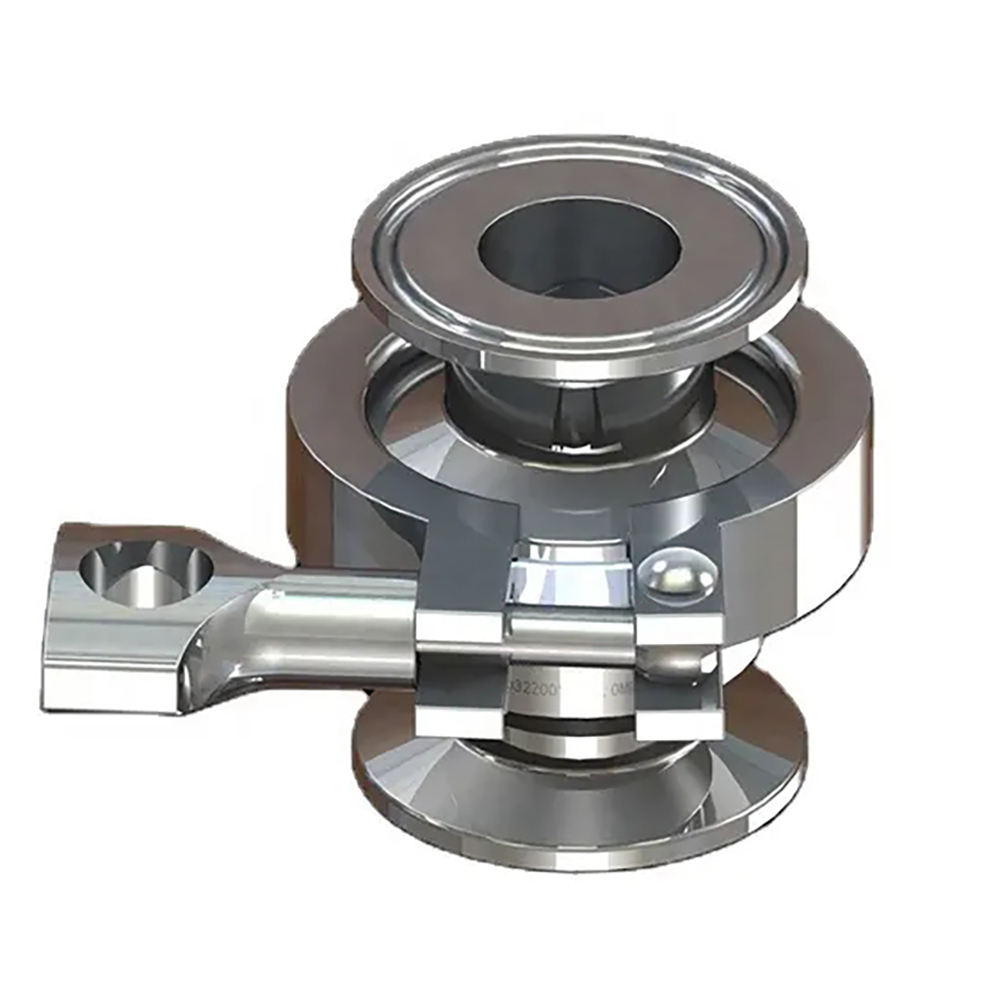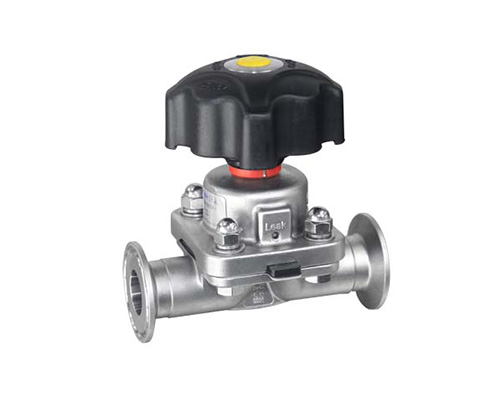
Manual Diaphragm Valve
working principle
Manual or pneumatic operation, specifically for sanitary and aseptic processes in the pharmaceutical industry. This valve is ideal for fluid control and on/off tasks. The diaphragm provides a body seal and a seat seal. There is no path to the outside environment, so the diaphragm valve is suitable for aseptic processes. When the valve is closed, the pressure pad supporting the diaphragm moves toward the sealing surface on the valve body. As the pressure plate moves, the diaphragm bends and is forced to the seat area in the center of the valve body, thus closing the fluid path to the valve body. The relationship between the valve body and the pressure plate prevents the compression of the diaphragm. The valve can be operated manually or pneumatically, or it can be controlled by a controller and solenoid valve.Technical specifications
- Specifications: 1"-4", DN25-DN100
- Pressure: 10bar (145 PSI)
- Material: ASTM 316L, 1.4404, 1.4435 NB2 Fe<0.5%
- Temperature: -20 C to +150 C (EPDM) / -4 F to +302 F (+140 C (SIP, 30) 284 F)
- Connection: clamp, welding, thread, 3A BPE DIN SMS IDF ISO
- Valve body structure: straight through, three-way, U-shaped three-way, tank bottom valve, multi-channel diaphragm valve
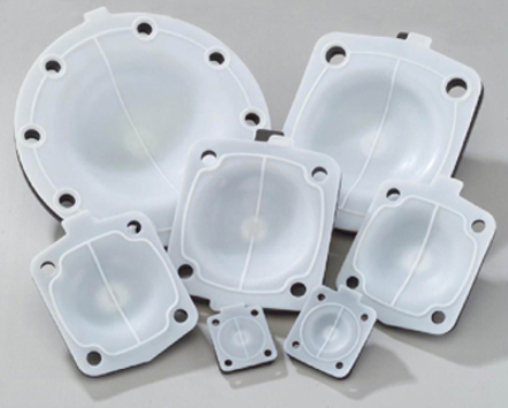
- Diaphragm material: EPDM + PTFE (double layer) / EPDM / Silicon / FPM (Viton)
- Certification: 3A-54-02/1580, PED 97/23 EC, FDA177.2600
Applications
- Power industry
- Vacuum services
- Breweries
- Corrosive applications
- Water treatment facilities
- Pharmaceutical manufacturing systems
Materials
- ASTM 316 L
Features and Benefits
- Leak-free operation: The diaphragm provides an effective seal between the valve body and the stem, significantly reducing the risk of leaks. This is particularly beneficial in applications where leakage could be hazardous or costly.
- Contamination control: Since the media only contacts the valve body and diaphragm, there is a reduced risk of contamination. The design minimizes areas where sediments or biofilms could accumulate, making these valves extremely clean and suitable for applications requiring high hygiene levels.
- Excellent flow control: Diaphragm valves offer precise flow control across a wide range of flow rates, making them suitable for throttling applications.
- Suitability for aggressive media: These valves are particularly effective for corrosive, viscous, and abrasive media, including slurries, due to their robust design and material selection.
- Simple maintenance: The diaphragm is easily replaceable without needing to remove the valve from the pipeline, facilitating straightforward maintenance and reducing downtime.
Specifications
●Size: 1/4 "-3/4", DN6-DN15
●Standard: BPE 3A DIN ISO IDF
●Certificate: PED/97/23/EC,3A/54-04/1580,FDA.177.2600
●Max Temperature: -30℃ to 150℃ (Depending on seal material)(Stainless steel actuator)
●Max Temperature: -30℃ to 130℃ (Depending on seal material)(Plastic actuator)
●Max Pressure: One way (DELTA P=100%)
EPDM8bar, PTFE 6 bar(Option)
EPDM6bar, PTFE 4.5 bar(Option)
Double action EPDM 8 bar,PTFE 6 bar
●Assembling different actuators can meet higher pressure rating.
●Forged Body: 1.4404/316L/1.4435 BN2
●Casting the body: 1.4404/316L
●Connection: Clamp, Weld, Thread, Flange
●Operations: Manual and pneumatic